
Renovating an Investment Property in Charlotte: Investor Guide
For real estate investors, the renovation is where a deal is made or lost. The right scope, a realistic schedule, and a contractor who understands investor goals can protect your margins and get your property to market or rented faster.
Why Investor Renovations Are Different
Renovating your own home and renovating an investment property are two very different projects. Homeowners often make decisions based on personal taste and long-term comfort. Investors need every decision to support a return, whether that means a strong resale price, reliable rental income, or a property that holds up to years of tenants. Time also matters more, because every week a property sits under construction adds holding costs. A contractor who understands investor renovations focuses on scope, speed, and durability, not just finishes.
Start With Your Exit Strategy
Before scoping a single repair, get clear on how you plan to profit from the property. A fix-and-flip aimed at retail buyers calls for different finishes and updates than a long-term rental or a property you plan to refinance and hold. Flips often need updates that photograph well and appeal to buyers in that neighborhood. Rentals call for durable, low-maintenance materials that can handle turnover. Your exit strategy should guide every decision about what to fix, what to upgrade, and what to leave alone.
Know the Neighborhood Before You Scope
The right renovation depends heavily on the neighborhood. Look at recently sold and rented comparable properties to understand what buyers and tenants in that area expect. Overimproving a property beyond what the neighborhood supports can eat into your profit, while underimproving can make it harder to sell or rent. Matching your finish level to the neighborhood standard is one of the most important decisions you'll make.
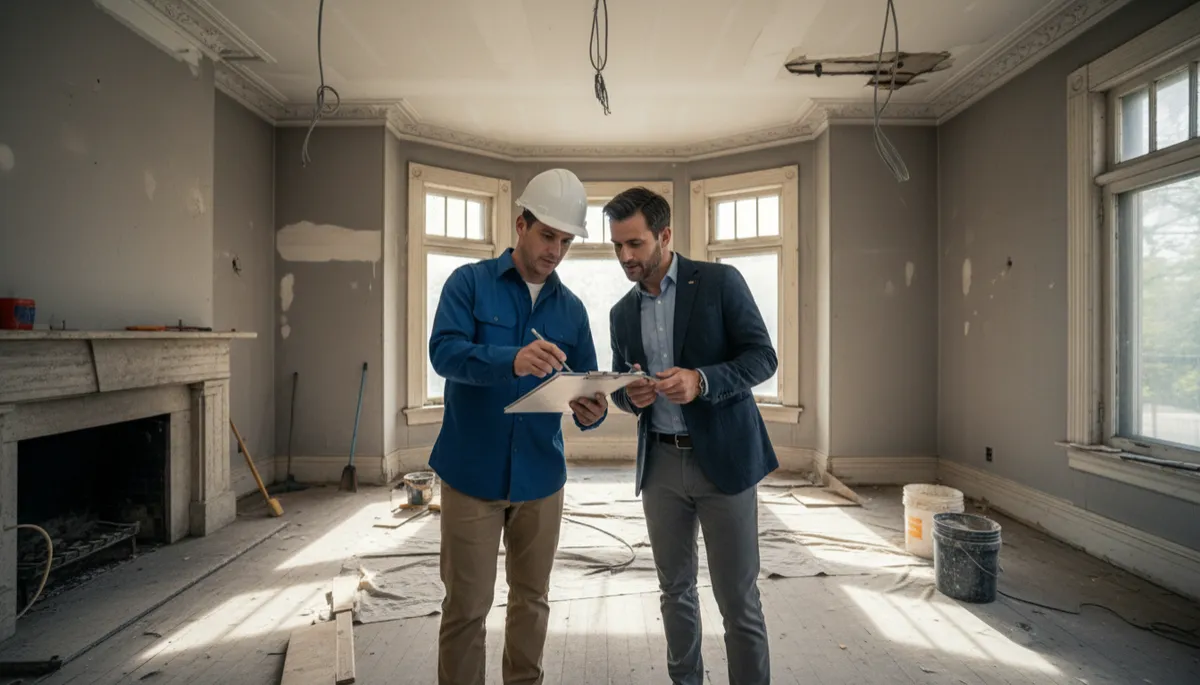
Walk the Property With Your Contractor Early
Whenever possible, walk the property with your contractor before you close or finalize your offer. An experienced eye can spot issues that affect your numbers, like signs of foundation movement, roof problems, water damage, outdated electrical panels, aging plumbing, or HVAC systems near the end of their life. These big-ticket items can make or break a deal. Knowing about them before you buy gives you the information to negotiate, adjust your offer, or walk away.
Prioritize Systems Before Finishes
It's tempting to focus on kitchens and bathrooms, but the most important work is often behind the walls and over your head. A property with a failing roof, leaking plumbing, unsafe electrical, or a worn-out HVAC system will create problems no matter how nice the countertops look. Buyers' inspectors will find these issues, and tenants will call about them. Addressing major systems first protects your investment and your reputation, then finishes can be layered on top.
Choose Durable, Repeatable Finishes
For rentals especially, durability matters more than trends. Luxury vinyl plank flooring, semi-gloss paint in high-traffic areas, solid-surface or quartz countertops, and simple, widely available fixtures hold up well and are easy to repair or replace. Many investors standardize their finishes across properties so repairs, turnovers, and future renovations are faster and more predictable. A repeatable finish package saves time on selections and keeps your properties consistent.
Write a Clear Scope of Work
A detailed scope of work protects both you and your contractor. It should spell out every item being repaired, replaced, or upgraded, the materials and finish level, and what's excluded. Vague scopes lead to misunderstandings, change orders, and delays. Walk the property room by room with your contractor and document what needs to happen in each space. A clear scope of work becomes the backbone of your proposal, schedule, and budget.
Plan for the Unexpected
Older properties and distressed homes often hide surprises. Once walls and floors are opened, crews may find rotted subfloor, termite damage, outdated wiring, or plumbing that needs to be replaced. Experienced investors build a contingency into their budget for these conditions. It's far better to plan for surprises and not need the money than to have a project stall halfway through because the budget has no room.
Time Is Money
Every week a property sits under renovation adds holding costs like loan interest, taxes, insurance, and utilities. That's why scheduling and coordination matter so much on investor projects. Ask your contractor how they'll sequence the work, how they handle materials with longer lead times, and how you'll be updated on progress. A realistic schedule with consistent communication helps you plan your listing date or move-in date with confidence.
Permits Still Matter
Some investors are tempted to skip permits to save time, but it's a risky shortcut. Unpermitted work can cause problems during a buyer's inspection, with appraisals, with lenders, and with insurance. It can also delay a sale or force work to be opened up and redone. A contractor who pulls the right permits and inspections protects your ability to sell or refinance the property without complications.
Choosing the Right Contractor for Investors
Not every contractor is set up to work with investors. Look for a licensed and insured general contractor who understands investor priorities, communicates clearly, provides detailed written proposals, and can handle multiple projects over time. A strong long-term relationship with a contractor you trust can make each deal faster and more predictable than the last. The best investor-contractor partnerships are built on clear scopes, honest communication, and consistent results.
How Your Project Moves Forward With Iconic
Iconic Build and Design works with real estate investors on flips, rentals, and value-add projects across the Charlotte area. Every project starts with an in-person walkthrough of the property, followed by a detailed written proposal that spells out the scope clearly. Once work begins, your Construction Operations Coordinator keeps you updated so you always know where your project stands.
Protect Your Margins With the Right Plan
A successful investment renovation starts with the right scope, a realistic budget, and a contractor who understands your goals. Know your exit strategy, match the neighborhood, fix the systems first, and plan for the unexpected. For investors in the Charlotte, NC and Fort Mill, SC areas, Iconic Build and Design brings clear proposals and one accountable team to every project. If you're evaluating a property or ready to start a rehab, book a walkthrough or call 980-288-4660.
Build bold. Design iconic. Let's make your next deal a success.