
Roof Insurance Claim in Charlotte: What Every Homeowner Should Know
Storms in the Charlotte area can leave roof damage behind, and a roof insurance claim is often how homeowners pay for the repair. Knowing how the process works helps you protect your home, your claim, and your budget.
Start by Understanding Your Policy
Before a storm ever hits, it pays to know what your homeowners policy says about your roof. Find your deductible, and check whether wind or hail damage carries a separate deductible. See whether your policy pays replacement cost or actual cash value, since that affects how much you receive for an older roof. Note any deadlines for reporting damage. Reading your policy ahead of time means fewer surprises when you need to file.
Know the Signs of Storm Damage
Roof damage is not always obvious from the ground. Common signs include missing or lifted shingles, granules collecting in gutters or at downspouts, dented vents or flashing, and dark or soft spots on the roof surface. Inside, look for water stains on ceilings, damp insulation in the attic, or daylight showing through the roof boards. Damage to gutters, siding, window screens, or cars after a storm can be a hint that the roof was hit too. Spotting damage early gives you the best chance at a smooth claim.
Stay Safe and Let a Professional Get on the Roof
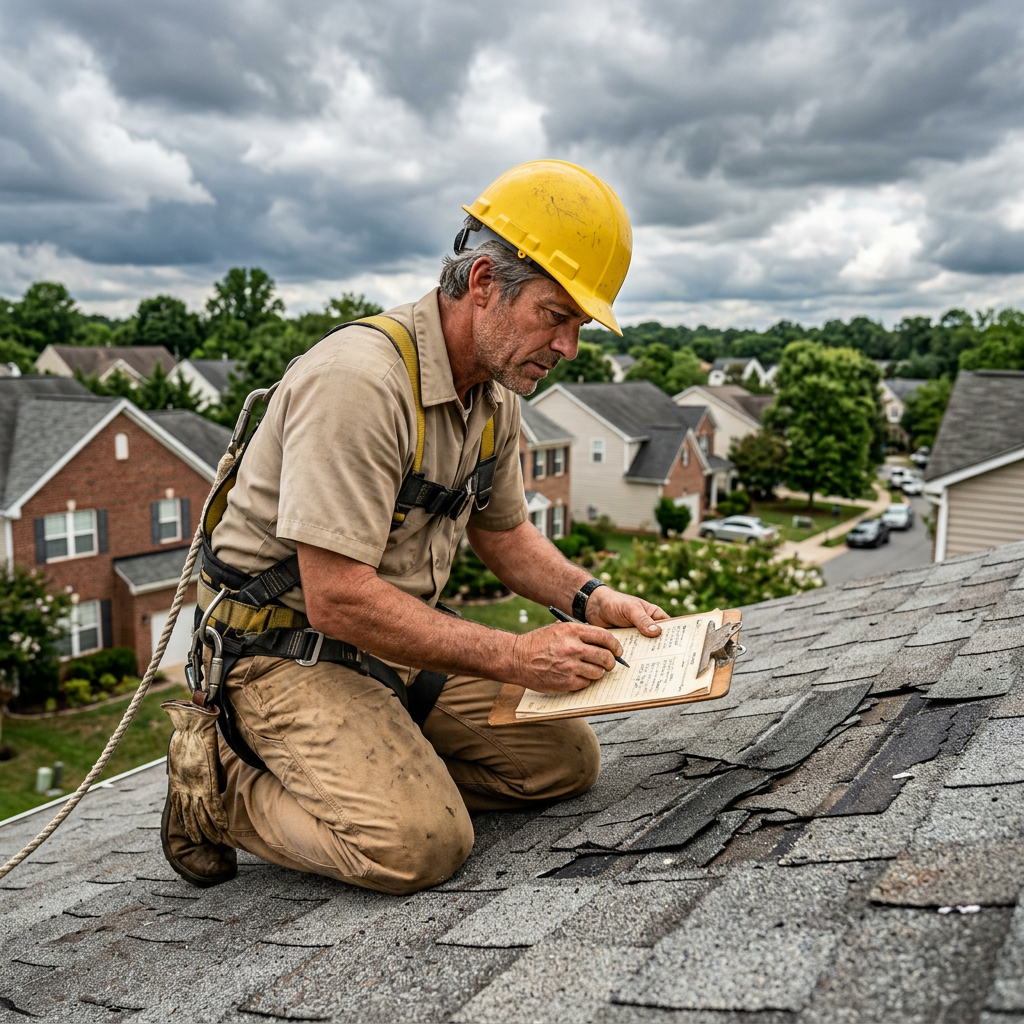
Climbing onto a roof after a storm is risky, especially when surfaces are wet or damaged. Take photos from the ground, from upstairs windows, and from the attic if you can do so safely. Leave the close-up inspection to a qualified roofing professional with the right safety equipment. A professional inspection also produces clearer documentation than most homeowners can gather alone. Your safety comes first, and no claim is worth a fall.
Prevent Further Damage Right Away
Most homeowners policies expect you to take reasonable steps to keep damage from getting worse. That can mean tarping an exposed area, catching drips, or moving belongings away from a leak. Keep receipts for any materials or emergency services you pay for. Hold off on permanent repairs until your insurer has had a chance to see the damage. Temporary protection keeps a roof problem from turning into a much larger interior water problem.
Document Everything Before Repairs Begin
Good records make a claim stronger. Photograph the roof, gutters, siding, windows, and any interior damage, and take video if you can. Write down the date of the storm and when you first noticed problems. Save every email, letter, and claim number in one place. A clear paper trail helps you answer questions quickly and keeps important details from getting lost.
File Promptly and Keep Notes on Every Call
Report the damage to your insurer as soon as you reasonably can. Waiting too long can make it harder to tie the damage to a specific storm. Each time you speak with your insurer, write down the date, the person's name, and what was discussed. Ask what the next steps are and when you should expect to hear back. Staying organized from the first call makes the rest of the process much easier to manage.
Be Prepared for the Adjuster Visit
Your insurer will usually send an adjuster to inspect the damage in person. Be home for the visit if you can, and share your photos and notes. Point out every area of concern, including interior stains and damaged gutters or vents. You can also have your roofing contractor present to answer questions about the roof's condition. A thorough inspection gives the adjuster the full picture the first time.
What a Contractor Can and Cannot Do
A roofing contractor can inspect your roof, document damage, and explain what a proper repair or replacement involves. A contractor can also attend the adjuster's inspection and answer questions about the roof itself. Negotiating your claim is a different role. That work belongs to you, your insurer, or a licensed public adjuster you choose to hire. If you do hire a public adjuster, confirm they are licensed in North Carolina before you sign anything.
Watch for Storm-Chasing Red Flags
After a big storm, out-of-town crews often show up in Charlotte neighborhoods. Some do honest work, while others are gone once they are paid. Be cautious of anyone who:
Knocks on your door and pressures you to sign that day
Offers to cover or waive your deductible
Asks for a large payment before any work or materials arrive
Has no local address or verifiable license and insurance
Taking time to vet a contractor protects both your claim and your home.
Review the Insurer's Scope Carefully
Once the adjuster finishes, your insurer will send a written breakdown of the approved repairs and pricing. Compare it line by line with what your contractor found on the roof. Look for missing items such as flashing, vents, drip edge, gutters, or damaged decking. If something was missed, ask your insurer how to request a review and send supporting photos. Understanding the approved scope before work begins helps avoid gaps between what is paid and what is needed.
Plan for Damage That Shows Up Later
Some damage stays hidden until the old roof comes off. Rotted or soft decking, damaged underlayment, and failed flashing are common examples. A good contractor documents these findings with photos as soon as they are uncovered. You can then share that documentation with your insurer and ask about additional coverage. Clear photos of hidden damage make that conversation much easier.
Choose a Contractor You Can Call Next Year
Your roof should last for many years, and so should your relationship with the company that installs it. Choose a local contractor with verifiable licensing and insurance and a clear warranty. Ask how they communicate during the job and who your point of contact will be. A detailed written proposal should spell out materials, scope, and cleanup. A contractor who will still be here when you need them is worth the extra time it takes to choose well.
Get Your Charlotte Roof Back on Solid Ground
For homeowners in Charlotte, NC and Fort Mill, SC, Iconic Build and Design can inspect your roof, document what we find, and explain the repair or replacement your home needs. We start with an in-person walkthrough, then sit down with you to present a detailed written proposal face to face. Once work begins, a Construction Operations Coordinator is your single point of contact. We are licensed in NC and SC. To get started, book an in-person walkthrough or call 980-288-4660.
Build bold. Design iconic. Protect your home with a roof done right.